The Bird Team had quite a successful day with over 600 individual sightings recorded. These included 2 blue fulmars, approximately 87 great skuas, numerous gannets, kittiwakes, fulmars, and less black-headed gulls. Last night the Zooplankton Team covered 5 stations with the deepest CTD launched to 2,187m. Very similar species were found in the shallower depths as the previous night. Two small deep dermsal fish and cornate jellyfish were also found. An interesting find was seeing 50+ garfish feeding on gobies under the lights near the surface as well as some metre long squid. Tonight this team hopes to conduct 4 more stations and reach the depth of 3,000m.
Our current position is 158 nautical miles off Ireland, 196 nautical miles off Land's End, England and 240 nautical miles off France. A distance of 100 nautical miles was covered by the hydrophone today and it is this same trackline where the CTDs and plankton hauls will be launched tonight.
Blog done by Teresa Martin
Monday, 27 February 2012

Day 4. Bottlenose dolphins on the Frontier
After just three days of surveying, the team put down a very significant day. The morning started off quiet but reached a climax when Randal and Roisin spotted a large group of bottlenose dolphins at the shelf break.
A quick decision was made to launch the RIB to attempt to obtain biopsy samples, one of the primary aims of the cruise. Despite the swell, sharp eyes and clear direction from the mother-ship successfully led the RIB to the dolphins and the team managed to take the first ever bottlenose dolphin biopsy samples in Irish offshore waters (indeed to our knowledge, of any species).
Additionally, 10 new individuals were added to the Irish bottlenose dolphin catalogue. This is a great accomplishment and shows that biopsy and photo-id using a rib launched from a research vessel in offshore waters is feasible in Ireland, even in February.....
The Marine Institute annual shiptime fund enables us to continue this research which helps Ireland to meet requirments under the EU Habitats Directive. A productive day on the bird front with a staggering 87 great skuas, hundreds of gannets (including first winter birds, unusually far north for the time of year), kittwakes, lesser black-backed gulls and fulmars (including two "blue" morphs). The planktonologists reported a spectacular light show from a sample of deep-sea zooplankton biomluminescing in a dark room in the wetlab. They also saw garfish and a very large (as opposed to Giant) squid, estimated at 1 metre at the surface while hauling their nets - attracted by the ship's flood lights. The mauve stinger (Pelagia notciluca) remains elusive.
 |
| Suveyors tracking bottlenose dolphins from the crow's nest |
 |
| R.V. Celtic Explorer near the King Arthur Canyon (C) Joanne O'Brien |
 |
| Bottlenose dolphins surfacing at speed (C) Joanne O'Brien |
 |
| More bottlenose dolphins offshore (C) Joanne O'Brien |
 |
| R.V. Celtic Explorer as seen from the IWDG RIB Muc Mhara (C) Joanne O'Brien |
Day 4: Birding Frenzy
It has been quiet this morning for the Cetacean team with only a few sightings of common dolphins, although one of these were of 60 individuals. These sightings were also acoustically dectected by the PAM (passive acoustic monitioring) Team. The Bird Team on the other hand have been quite busy indeed with over 60 sightings so far, ranging from gannets to great skuas. The weather conditions started off as overcast but now the sun is shining with a sea state of 4 and swell height of 2m+. The Zooplankton Team covered 5 stations last night and had many interesting species including 2 garfish.
Check back for more updates around 8pm tonight.
Blog done by Teresa Martin
Check back for more updates around 8pm tonight.
Blog done by Teresa Martin
Sunday, 26 February 2012
Day 3: Canyoning...
The Bird Team had the most sightings today including 2 skylarks, 2 lapwings, a manx shearwater, 32 great skuas, numerous gannets, kittiwakes, and some fulmars. The Cetacean Team had 20 sightings of common dolphins as well as 2 minke whales.
The Zooplankton Team was quite busy during the night hours launching CTDs to depths of 2,176m. An ostracod was found at 1,200m and there were 6 stations covered from 8pm – 7am. The main findings included euphausiids, some copepods, planktonic polychaetes and a single starfish larva. The average rate of the CTDs launched were that of 40m / minute.
Today we travelled down Whittard Canyon and then up King Arthur Canyon and our current position is approximately 160 nautical miles off Fastnet, Ireland and 210 nautical miles off Land's End, England. The Zooplankton Team plan to have 5 stations tonight over the same track line which was covered earlier by the Cetacean and Bird Teams.
Check back tomorrow for an overview on each of the teams and why their research is important for sustaining Ireland's oceans.
Blog done by Teresa Martin
Check back tomorrow for an overview on each of the teams and why their research is important for sustaining Ireland's oceans.
Blog done by Teresa Martin
Saturday, 25 February 2012
Day 2 - the Species List
The Cetacean and Bird Team had one busy and successful day all round. The Bird Team ended up with a species list containing gannets, kittiwakes, fulmar and even 2 blue fulmar which was quite interesting, lesser black-backed gulls, 27 great skuas, 16 puffins, and a starling that was heading West! The Cetacean Team had sightings of 2 minke whales, 1 fin whale, numerous common dolphins, 2 groups of bottlenose dolphins with one groups associating with common dolphins, and ended the day with 30 long-finned pilot whales.
We are currently, 171 nautical miles off the Irish coast, 175 nautical miles off the English coast and 200+ nautical miles of the French coastline. The phytoplankton and jellyfish team are in full swing for the evening running CTDs off the same track line the Cetacean and Bird teams covered earlier.
Here are some of the highlights from today and check back tomorrow for more updates.

Figure 1: Breaching Common Dolphin. (picture by Joanne O'Brien)

Figure 2: Long-finned Pilot Whales investigating the R.V. Celtic Explorer. (picture by Joanne O'Brien)
Blog done by Teresa Martin
Day 2: "Sighting!...."
We are half way through our effort for today and have recorded over 10 cetacean sightings. Most of these are of Common dolphins with a few Bottlenose dolphins as well. 2 of these sightings had Common and Bottlenose dolphins individuals grouped together, which is a rare sight. Even more important is that for the majority of these sightings, calves were present within the pods.
The Bird Team have also been kept busy with sightings of gannets, kittiwakes, lesser black-headed gulls, a few skuas, and even a puffin. Pictures were taken of these cetacean and bird sightings which will be posted this evening.
Our current location is 140 nautical miles South of Mizen Head. Tonight we will be coming back on the track line for deployment of CTDs needed for phytoplankton and jellyfish analysis.
Check back later for more updates.
Blog done by Teresa Martin
Friday, 24 February 2012
Day 1: Departure from Cork city to Labadie Bank
We are well underway now :) The Celtic Explorer disembarked from Horgan's Quay at 16:00 hours and made the trip down to Cork Harbour. Once in Cobh the crew launched the IWDG rib for a test run. We are now steaming SW to Labadie Bank where we will be deploying 2 C-Pods for acoustic detections of bottlenose dolphins.
The first mammal sighting of the day was of a few curious grey seals just coming into Cork Harbour. The journey to Cobh kept the Bird Team quite occupied with sightings of kestrels, black guillemots, gannets, kittiwakes, 2 Mediterranean gulls, 27 great crested grebes, black and bar tailed godwits. There was even a unusual sighting of a first winter ringed-billed gull spotted on a rooftop in Cobh village. These birds breed in North America and a rare sight this time of year.
We have also had a couple cetacean sightings with the first being 5 bottlenose dolphins - one of which was a juvenile, who came and enjoyed a brief bow ride just before dinner. These dolphins are most likely part of the resident pod here in Cork. A single common dolphin was spotted just after sunset and enjoyed some quality time with the wake being created by the stern propellers a few kilometers off the coast.
Of of the last cetacean sightings tonight were 3 common dolphins chasing the aft light of the ship surfing the waves on a clear starry night. Our location at 22:30 hours is + 20 nautical miles offshore.
Here are some of the highlights to date:

Figure 1: The IWDG rib being loaded onto the Celtic Explorer Thursday evening. (Picture by Conor Ryan)

Figure 2: Students, Scientists and Crew undertaking an emergency action plan drill.
(Picture by Conor Ryan)

Figure 3: The R.V. Celtic Explorer as seen from the rib during it's test run in Cork Harbour.
(Picture by Conor Ryan)

Figure 4: The R.V. Celtic Voyager on it's journey into Cork Harbour for another expedition starting tomorrow. (Picture by Conor Ryan)

Figure 5: The Celtic Explorer in dock at Cork Harbour pre-departure. (Picture by Teresa Martin)

Figure 6: Some of the Students and Scientists on board the Celtic Explorer. (Picture by Teresa Martin)

Figure 7: Cobh village on our way out to the Atlantic Ocean. (Picture by Teresa Martin)
** Check back tomorrow for position updates and expedition highlights. **

Figure 1: The IWDG rib being loaded onto the Celtic Explorer Thursday evening. (Picture by Conor Ryan)

Figure 2: Students, Scientists and Crew undertaking an emergency action plan drill.
(Picture by Conor Ryan)
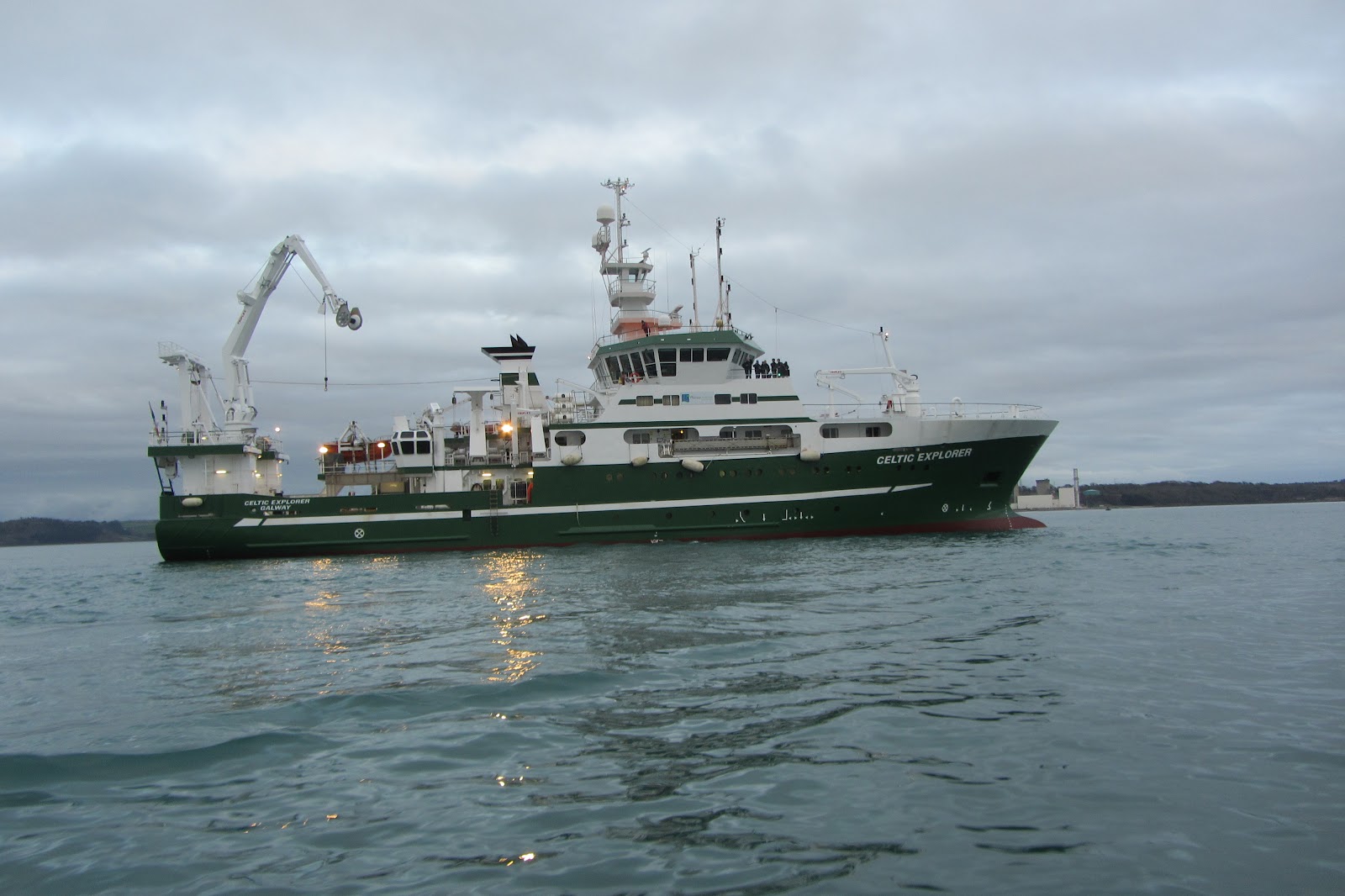
Figure 3: The R.V. Celtic Explorer as seen from the rib during it's test run in Cork Harbour.
(Picture by Conor Ryan)

Figure 4: The R.V. Celtic Voyager on it's journey into Cork Harbour for another expedition starting tomorrow. (Picture by Conor Ryan)

Figure 5: The Celtic Explorer in dock at Cork Harbour pre-departure. (Picture by Teresa Martin)

Figure 6: Some of the Students and Scientists on board the Celtic Explorer. (Picture by Teresa Martin)

Figure 7: Cobh village on our way out to the Atlantic Ocean. (Picture by Teresa Martin)
** Check back tomorrow for position updates and expedition highlights. **
Blog done by Teresa Martin.
Subscribe to:
Posts (Atom)